
Estate Technology Design
Architectural Lighting & Shading Design
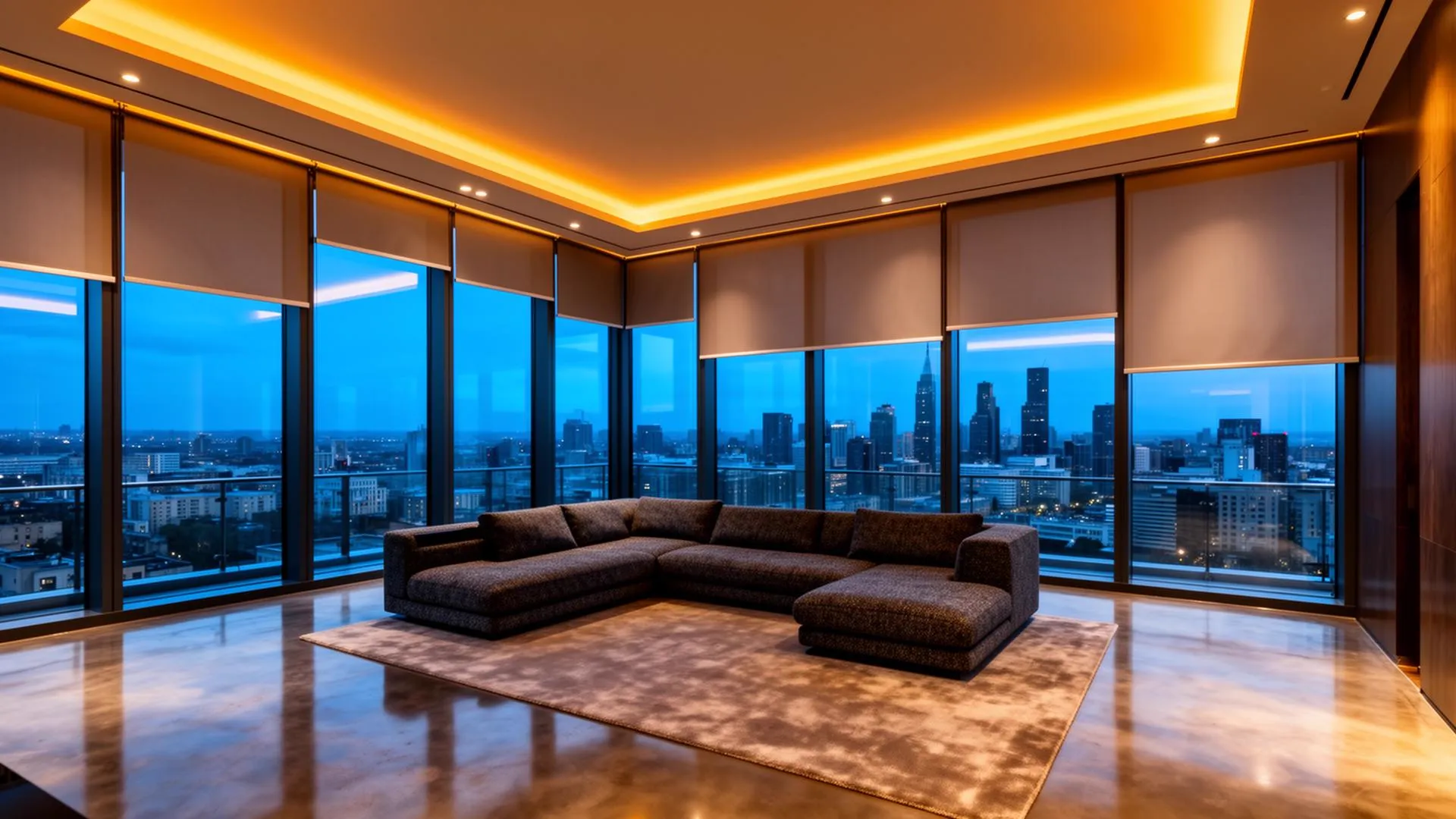
Lighting defines the character of an estate. Shading defines its comfort. Peters Audio Video designs intelligent lighting control and motorized shading environments that enhance architecture, improve energy efficiency, and create effortless ambiance — with clean interfaces and minimal visible hardware.
Schedule a Design ConsultationUnderstanding Lighting Control
What Is Architectural Lighting Control?
Architectural lighting control is a professionally designed system that replaces conventional light switches with intelligent keypads, automated scheduling, and scene-based programming. Instead of walking room to room adjusting individual dimmers, a single keypad press can set the perfect atmosphere for dinner, cinema, entertaining, or bedtime — coordinating dozens of circuits simultaneously.
In luxury estates, lighting control serves three essential functions: aesthetic enhancement (highlighting architectural features, art, and landscape), wellness support (circadian tuning that adjusts color temperature throughout the day), and energy efficiency (intelligent scheduling, vacancy sensing, and solar-responsive shading that reduces HVAC costs by up to 50%).
When combined with motorized shading, the system becomes transformative. Shades automatically respond to sun position, time of day, and occupancy — protecting furnishings from UV damage, managing solar heat gain, and providing privacy, all without lifting a finger. This is the standard Peters Audio Video designs to for estates throughout Charlotte's finest neighborhoods including Myers Park, SouthPark, and Lake Norman.
Lighting & Shading Design
Intelligent Light, Invisible Control
Our lighting and shading designs replace complexity with simplicity. One keypad press can set the perfect lighting scene for dinner, lower the shades at sunset, and dim the hallways for evening — all automated and fully integrated with your estate's control platform.
Architectural Lighting Control
Centralized dimming, scene programming, and keypad control for every circuit. Elegant keypads replace banks of switches with one‑touch scene control — designed to complement interior finishes.
Motorized Shading & Drapery
Automated roller shades, Roman shades, and drapery tracks that respond to time of day, sun position, or manual control — protecting interiors and managing solar gain with invisible technology.
Circadian & Wellness Lighting
Color‑temperature design that shifts throughout the day to support natural circadian rhythms, promoting better sleep and daytime energy — engineered as part of the lighting architecture.
Technology Stack
Technology Stack for Lighting & Shading
Lutron HomeWorks QSX, Savant, Crestron
Architectural dimming, scene programming, and intelligent scheduling across every circuit in the estate
Lutron Palladiom, Savant Keypads, Crestron Horizon
Designer-grade keypads in custom finishes that complement interior design — replacing banks of switches with elegant one-touch control
Lutron Palladiom, Hunter Douglas PowerView, QMotion
Whisper-quiet motorized roller shades, Roman shades, and drapery tracks with automated solar tracking
Ketra (Lutron), USAI Lighting, Colorbeam
Dynamic color-temperature adjustment from 2200K to 6500K for circadian rhythm support and scene versatility
Explore Ketra full-spectrum lighting →Coastal Source, FX Luminaire, Savant
Landscape, architectural, and pathway lighting orchestration with automated scheduling and scene integration
Investment Guide
Lighting & Shading Investment Ranges
Essential Lighting & Shading
$20,000 – $50,000Lighting control for key living areas with 4-8 keypad locations, basic motorized shading for primary rooms, and Savant scene programming. Ideal for targeted upgrades or smaller luxury homes.
Estate Lighting & Shading
$50,000 – $100,000Comprehensive Lutron HomeWorks or Savant lighting across all circuits, motorized shading throughout, circadian programming, and exterior lighting control. Our most popular configuration for estates 5,000-10,000 sq ft.
Reference Lighting & Shading
$100,000 – $150,000+Full Ketra tunable white LED specification, premium Lutron Palladiom shading on every window, landscape lighting orchestration, and concierge-level programming with seasonal scene updates. For estates demanding the absolute best.
Design Capabilities
Full Lighting & Shading Design Capabilities
Specification Standards
Choosing Shade Type, Fabric, and Control by Room
Shade selection comes down to three decisions per window: the shade type that fits the architecture, the fabric openness that controls glare while preserving the view, and whether control is wired or wireless. One to three percent openness suits living areas, while bedrooms and theaters take blackout fabric with side channels.
| Room | Shade type | Fabric | Control priority |
|---|---|---|---|
| Great room & living | Roller in pocket or fascia | 1–3% openness solar screen | Glare and solar heat, sun-tracking schedule |
| Kitchen & breakfast | Roller, cleanable fabric | 3–5% openness | Morning daylight, keypad by the entry |
| Primary bedroom | Layered roller plus drapery | Sheer over blackout | Blackout at night, gradual wake scene |
| Home theater | Roller with side channels | Blackout, matte dark face | Zero light leak, closes with the movie scene |
| Study & office | Roller or Roman | 1–3% openness | Screen glare control during working hours |
| Dining & formal rooms | Roman or motorized drapery | Decorative, lined | Scene appearance for entertaining |
How We Design a Lighting and Shading System
- 01
Review plans with the design team
Fixture schedules, window schedules, and interior finishes are reviewed with the architect and interior designer before any load is assigned.
- 02
Assign loads and dimming type
Every circuit is matched to the correct dimming method for its fixture and driver so LEDs dim smoothly to low levels without flicker or buzz.
- 03
Plan keypad locations and engraving
Keypads are placed at natural entry points, with button counts and engraved labels kept consistent room to room so the house reads the same everywhere.
- 04
Detail shade pockets early
Pockets, fascias, headrail depths, and power runs are coordinated with the framer and electrician during rough-in, since they cannot be added later without construction.
- 05
Select fabrics with the designer
Openness factor, color, and weave are chosen per elevation for glare control, view retention, and how the fabric reads from outside the house.
- 06
Program scenes around real routines
Morning, day, entertaining, cinema, evening, and away scenes are built from how the household actually uses each space, then tuned after move-in.
- 07
Set astronomic and sensor triggers
Schedules follow local sunrise and sunset, with shades responding to sun position so daylight is used before electric light is added.
Shade pockets and keypad wiring must be established before drywall, which is why lighting and shading belong in new construction technology planning alongside low voltage wiring. Local services are detailed on our Charlotte lighting control and motorized shading pages.
Frequently Asked Questions
What is an architectural lighting control system?
An architectural lighting control system replaces standard switches with intelligent keypads and dimmers that control multiple circuits, create lighting scenes, and automate schedules. Designed as part of the home's architecture, these systems integrate with your estate's automation platform for unified control of lighting, shading, climate, and entertainment.
How much does lighting and shading design cost for a luxury estate?
Lighting control systems for luxury estates typically range from $20,000 to $100,000+ depending on the number of circuits, keypad locations, dimmer types, and integration complexity. Motorized shading adds $1,500 to $5,000+ per window depending on shade type and fabric selection. We provide detailed design proposals after consultation.
What is circadian lighting design?
Circadian lighting design automatically adjusts color temperature throughout the day — cooler, energizing tones in the morning and warmer, relaxing tones in the evening — supporting natural sleep cycles and wellness. This is designed as part of the estate's lighting architecture, not added as an afterthought.
Can motorized shades be designed for existing windows?
Yes. Motorized shading can be designed for most existing windows. Options include roller shades, Roman shades, drapery tracks, and exterior screens. Battery-powered options are available where hardwiring is not feasible. Our design documentation identifies optimal solutions for each window.
What is the difference between Lutron and Savant lighting control?
Lutron HomeWorks QSX is the industry standard for dedicated lighting control with unmatched dimming quality, fade rates, and keypad aesthetics. Savant provides lighting control as part of a unified automation platform that also manages audio, climate, and security. Many of our luxury projects use both: Lutron for lighting precision and Savant for whole-estate orchestration and scene programming.
How does motorized shading save energy?
Motorized shading reduces cooling costs by 30-50% in south-facing rooms by blocking solar heat gain during peak hours. Smart scheduling and solar tracking automatically adjust shades based on sun position throughout the day — no manual intervention required. For Charlotte's hot summers, this translates to significant HVAC savings and improved comfort across large estates.
What motorized shade brands do you specify?
We specify Lutron Palladiom and Sivoia QS for premium roller and Roman shades with the quietest motors in the industry. Hunter Douglas PowerView for the broadest fabric and style selection. QMotion for ultra-quiet, battery-powered retrofit solutions. Every shade is selected based on window type, architectural style, light control requirements, and interior design preferences.
Can lighting scenes be customized for different activities?
Absolutely. We program custom scenes for every lifestyle moment: 'Dinner Party' sets dining room to warm 15% with accent lighting; 'Movie Night' dims living areas and closes shades; 'Good Morning' gradually brightens the master suite with cool white light; 'Away' simulates occupancy patterns for security. Each scene coordinates lighting, shading, and climate simultaneously.
What is the difference between roller shades, Roman shades, and drapery automation?
Roller shades are the most architectural option, disappearing into a pocket or fascia and best suited to large glass and modern interiors. Roman shades add soft folds and a more traditional, upholstered look, and are common in bedrooms and formal rooms. Motorized drapery moves fabric panels along a track and is used where the window treatment is part of the room's decorative scheme. Many estates layer a sheer roller shade with drapery on the same window, controlled as one scene.
How do I choose shade fabric openness for glare control?
Openness factor describes how much light a fabric transmits. One to three percent openness preserves the view while cutting most glare and is the usual choice for living areas and offices. Five percent openness keeps a brighter, more open view for rooms with a valued outlook. Blackout fabric transmits no light and is specified for bedrooms, theaters, and media rooms, typically with side channels to control light leak at the edges.
Should lighting control be wired or wireless?
New construction should use a wired, centralized panel system, where dimming modules live in an electrical closet and keypads connect over a control bus. It offers the cleanest walls, the most reliable performance, and the broadest load compatibility. Finished homes generally use wireless dimmers and keypads that replace existing switches without opening walls, which delivers most of the same experience with far less disruption.
What is circadian or human-centric lighting?
Circadian lighting adjusts both brightness and color temperature over the course of the day: cooler, brighter light in the morning to support alertness, warmer and dimmer light in the evening to support winding down. It requires tunable-white fixtures and a control system that tracks local sunrise and sunset. Paired with automated shading, the system uses daylight first and supplements it with electric light only as needed.
Design Your Estate With Light
Schedule a design consultation to explore how architectural lighting and shading can enhance the beauty, comfort, and energy efficiency of your estate.
Schedule a Design ConsultationServing Charlotte, NC · Myers Park · SouthPark · Lake Norman · Select estates across the Carolinas
Charlotte, North Carolina
Talk with us about your project in Charlotte
Monday–Friday, 8:00–5:00. Evenings and weekends by appointment.
Where we work
We design and support estate technology across the Charlotte metro area, working from our SouthPark office with builders, architects and homeowners.
All service areas