
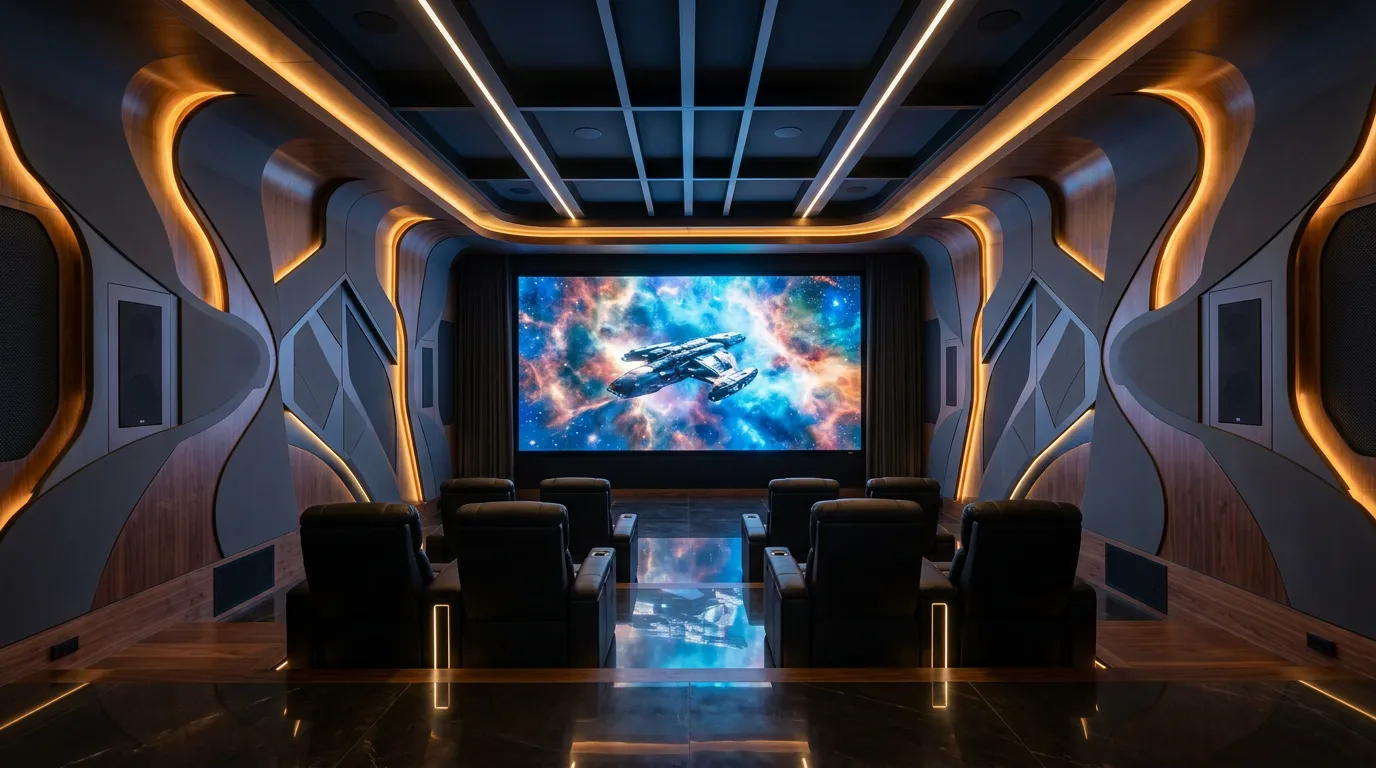
Product Category
Video & Projection
Reference-Grade Projection & Display Technology for Private Cinemas
Overview
Video technology defines the visual experience of every private cinema, media room, and living space in the estate. From laser-phosphor projectors delivering cinema-grade contrast to OLED displays that disappear into architecture, video is where technology meets spectacle.
Peters Audio Video specifies and calibrates video systems from the industry's most respected manufacturers — Sony's native 4K SXRD projectors, JVC's D-ILA technology, Barco's residential cinema platform, and Samsung's flagship displays.
Every display and projector we install is professionally calibrated to reference standards, ensuring color accuracy, contrast, and HDR performance that matches the director's intent.
What We Design
Design Capabilities
4K projection and higher-resolution options where supported by the selected model
Professional display calibration
Motorized projection screens and masking systems
OLED and MicroLED display integration
Ambient light rejection screen technology
HDR format compatibility confirmed for each selected display and signal path
Selection & Specification
Before You Choose Video & Projection
Compare the complete system against your room and intended use. Product families described here are starting points; current models, availability, specifications and integration support must be confirmed for the proposed equipment.
- Light and seating
- Measure viewing distance and identify daylight and reflections before choosing screen size. Compare projection and flat panels in the actual room conditions, not from resolution or peak brightness alone.
- Screen and lens pairing
- Check the exact projector's throw range, lens shift and mounting clearance against the screen width and room depth. Screen material, aspect ratio and speaker placement need to be selected together.
- Sources and formats
- Confirm the complete signal path for your sources: HDMI bandwidth, HDR formats, gaming frame rates and audio return. A display feature is useful only if the source, distribution and cabling support it too.
Bring to the Design Conversation
Room dimensions, seating positions, windows, intended sources and the proposed screen wall.
Our Portfolio
Brands We Specify — Video & Projection
Sony
Video & Projection
Reference-Grade Display & Projection for Private Cinema Environments
Samsung
Video & Displays
Premium Display Technology from The Frame to The Wall
JVC
Video & Projection
Native 4K D-ILA Projection — The Reference Standard for Private Cinema
Barco
Video & Projection
Commercial Cinema Technology — Brought Home for the Ultimate Private Theater
Panasonic
Video & Projection
Professional-Grade Projection — Hollywood Color Science for Private Cinemas
Epson
Video & Projection
Accessible Laser Projection — Cinema-Quality Light for Every Theater
SIM2
Video & Projection
Italian Cinema Artistry — Handcrafted Projectors for the World's Finest Theaters
Common Questions
Video & Projection — Frequently Asked Questions
Should a media room use a projector or a large TV?
In rooms with daylight or ambient light, a large flat panel is usually the better choice because it stays bright and contrasty. Dedicated theaters with light control benefit from projection, which delivers screen sizes well beyond what TVs offer. The room's light, seating distance and use decide the answer.
What is display calibration and is it worth it?
Calibration adjusts a display's color, brightness and gamma to industry reference standards using measurement equipment. Factory settings are tuned to stand out in a showroom, so calibration typically gives more accurate skin tones, better shadow detail and less eye fatigue — especially valuable for projectors and large premium displays.
How far should seating be from the screen?
For 4K content, a viewing angle of roughly 40 to 50 degrees gives an immersive picture without visible pixels. In practice that means the screen width is a little more than half the seating distance. We model sightlines, screen height and seat rows during design rather than relying on a single formula.
Can video equipment be hidden away from the TV?
Yes. Streaming devices, cable boxes and media servers can live in a central equipment rack, with video sent to each display over HDBaseT or network-based distribution. That keeps rooms free of boxes and lets one source feed several screens.
Design Your Video & Projection System
Every video & projection system begins with a conversation about your home, your lifestyle, and the experience you want technology to deliver.