
Product Category
Home Theater Systems
Reference-Grade Private Cinemas — Acoustics, Immersion, Architecture
Overview
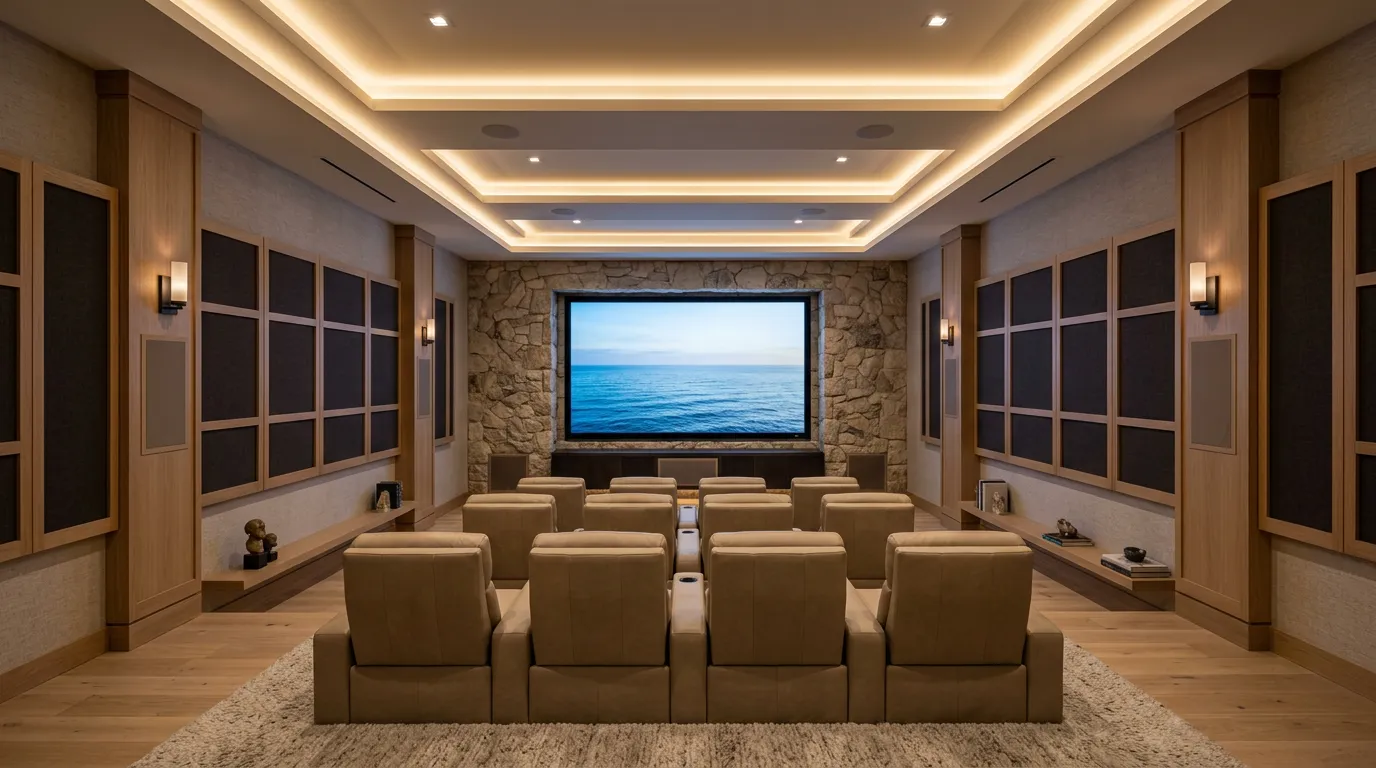
A true private cinema is more than a big screen and surround speakers — it's an architecturally designed environment where acoustics, lighting, seating, projection, and immersive audio converge into an experience that rivals the finest commercial theaters.
Peters Audio Video designs theater systems built on reference-grade processing from Trinnov and StormAudio, speaker systems from JBL Synthesis and Triad, projection from Sony and JVC, and movie servers from Kaleidescape.
Every theater we design undergoes acoustic modeling, speaker placement optimization, and professional video calibration to ensure the experience matches the architect's vision and the homeowner's expectations.
What We Design
Design Capabilities
Dolby Atmos and DTS:X immersive audio up to 9.4.6 configurations
Reference-grade AV processing and amplification
Acoustic treatment and room optimization
Motorized screens with masking systems
Kaleidescape movie server integration
One-touch cinema automation scenes
Selection & Specification
Before You Choose Home Theater Systems
Compare the complete system against your room and intended use. Product families described here are starting points; current models, availability, specifications and integration support must be confirmed for the proposed equipment.
- Room before equipment
- Set seating rows, sightlines, screen wall and door locations first. Acoustic isolation, ventilation and light control are construction decisions; electronics alone cannot resolve every room limitation.
- Complete audio chain
- Match processing channels, amplification, speakers and subwoofers to the seating area. Distinguish channels a processor can decode from channels it can power, and leave space for acoustic treatment.
- Scope boundaries
- Ask whether a proposal includes room construction, treatment, seating, lighting, screen, electronics and commissioning. Compare like-for-like scopes rather than two equipment totals.
Bring to the Design Conversation
Room dimensions, desired seating capacity, adjacent quiet rooms and a scope that distinguishes construction from technology.
Our Portfolio
Brands We Specify — Home Theater Systems
Trinnov
Home Theater Processing
The World's Most Advanced Home Theater Processor
Stewart Filmscreen
Projection Screens
The Reference Standard in Projection Screen Technology
Marantz
Home Theater
Legendary Japanese Audio Engineering — Cinema-Grade AV Receivers & Amplification
Denon
Home Theater
Performance-Driven AV — Power, Precision, and Immersive Sound
Screen Innovations
Home Theater
Architectural Projection Screens — Where Technology Meets Interior Design
Anthem
Home Theater
Canadian Engineering with ARC Room Correction — Science-Driven Cinema Sound
Lyngdorf
Home Theater
Fully Digital Amplification with RoomPerfect™ — Danish Precision for Cinema & Music
StormAudio
Home Theater
Ultimate Immersive Audio Processing — 32-Channel Dolby Atmos for Reference Cinemas
Da-Lite
Home Theater
Projection Screen Authority — 115 Years of American Screen Engineering
Draper
Home Theater
Precision Projection Surfaces — American-Made Screens Since 1902
Further Reading
Related Guides
Common Questions
Home Theater Systems — Frequently Asked Questions
What makes a dedicated home theater different from a media room?
A dedicated theater is designed around one purpose: controlled light, acoustic treatment, isolation from the rest of the house, tiered seating and a reference-grade audio and video chain. A media room is a multi-use space with comfortable seating and a large display. Both can perform very well; the theater simply removes compromises.
How many speakers does an immersive theater need?
Dolby Atmos layouts start with a 5.1.2 or 7.1.4 configuration — floor-level speakers, subwoofers and overhead channels. Larger rooms and multiple seating rows benefit from more channels and multiple subwoofers so every seat hears consistent bass and placement. Room dimensions guide the final layout.
Why does room acoustics matter so much?
The room shapes what you hear as much as the speakers do. Hard parallel walls create echoes and uneven bass, while correct absorption, diffusion and bass management produce clear dialogue and tight low frequencies. Acoustic planning and calibration are where a good theater becomes a great one.
How long does a home theater project take?
A theater in new construction follows the build schedule, with pre-wire, construction details, finish work and calibration at distinct stages. A remodel of an existing room typically takes several weeks from approved design to calibration, depending on construction, custom seating and equipment lead times.
Design Your Home Theater Systems System
Every home theater systems system begins with a conversation about your home, your lifestyle, and the experience you want technology to deliver.